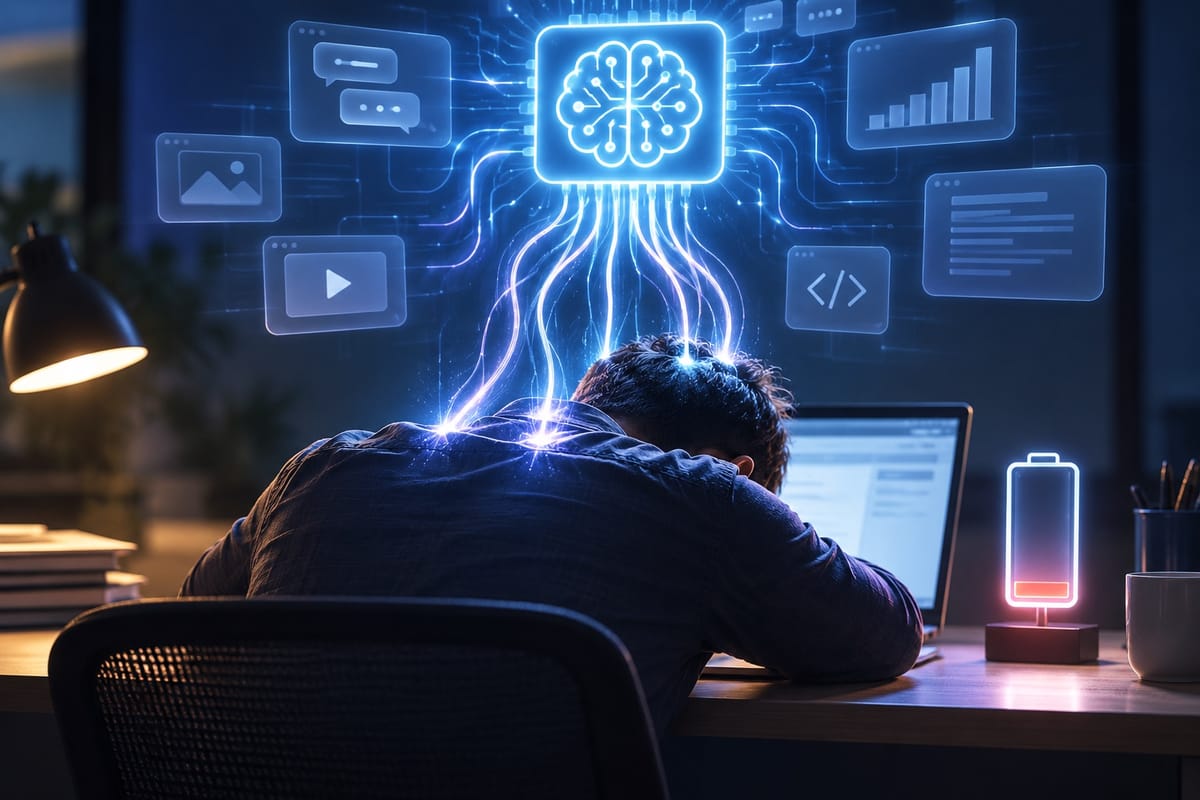
The AI pitch was simple: We’d get our time back. We’d be liberated. Instead, we’ve become full-time babysitters for hallucinating interns. I run security companies, I own trucks and manage technicians, and I’ve realized that for most of us, AI isn't the cure for burnout. It’s the cause.
The pitch for AI was simple. It would take the busywork off your plate and free you up for the things that actually matter. For a lot of people, in practice, it does the opposite. It drains them.
I've felt it myself, and I think I know why.
Why It Drains You
When you reach for an AI tool, you usually add work instead of removing it. There's more you can do now, which means more output to check and verify. So you spend your energy babysitting the AI instead of being freed by it.
There's a deeper reason, and it's the part I keep coming back to. Most of the work you do well, you do on autopilot. It sits at the bottom of your brain and runs on instinct. You don't think about it, you just do it. The moment you hand that work to a machine, you have to pull all of it up to the front of your mind, because you have to explain every step before the thing can act. Dragging all of that instinct up to your frontal lobe and putting it into words is what wears people out. More energy spent, not less.
Think of it like driving a car. You don't consciously think about steering or braking; you just drive. AI forces you to write a 10-page manual on how to turn the wheel before you can even leave the driveway. This is the 'Cost of Explicit Instruction', and it's the hidden tax we pay for automation.
Here's what it looks like in practice. The AI produces the thing step by step, and it's genuinely helpful. Then you catch the design problems you have to fix. You catch the copy that reads like AI and has to be made human again. You think through the next steps in the process. You review it, you improve it, and the whole time it's more isolating and more draining than just doing the work by instinct would have been.
And the people selling the dream aren't helping. Sam Altman and the other AI executives keep promising liberation from busywork, while the day-to-day reality of using their products points the other way. The dream that gets promised is usually not the thing that's actually happening.
So I stopped fighting it and changed how I work.
How I Work Now
The Intention Principle: AI is a mental game, not just a tool problem. Frustration is almost always a lack of intention. People open a chat, throw a vague prompt at the void, and blame the AI when the output is useless.
The Pre-Mortem Principle: Never let the machine 'start' until you've finished the thinking. Spend real time on a detailed planning session inside the chat. Come with an outlined plan and a clear agenda, not a vague ask.
Stop 'writing' with AI. Drafting forces thinking; AI bypasses it. Use it for execution, not exploration. Give it a brief, not a conversation.
Stake-based standards. Internal work needs utility, not polish. Client-facing work needs human design standards. Know which bar you're clearing before you prompt.
Refresh the context. Past 60% capacity, models lose their edge. When the chat gets muddy, start a fresh one. Use workspaces to keep projects contained.
Enforce 95% confidence. Tell the model: only output if you're 95% certain; otherwise, ask. This forces the machine to clarify your goals instead of guessing at them.
Dial down the effort. Flagship models often have too much 'attitude' at max strength. Running them at medium or low effort often produces more compliant, useful results.
None of this is complicated. It's mostly a matter of going in with a plan and refusing to treat the tool like a coworker who reads your mind. Do that, and the drain eases up. You spend less of the day pulling instinct work to the front of your brain and more of it doing the part you're actually good at.
Where This Goes
We aren't heading toward a world of infinite, automated ease. We are heading toward a world of leverage. The winner won't be the person with the best prompt library. It will be the person who understands the architecture of their own instincts so well that they can clone them into a digital army.
A small team that happens to be mostly machines, pointed at a clear intention and told to ask before it guesses. That's the freedom you build on purpose, not the kind you get handed.